Where to Pitch a Tent in the Kiso Valley
Most people walking the Nakasendo Kiso Valley stay in ryokan and minshuku, and for good reason: it’s both the traditional and enjoyable way to do this route, and the welcome at places like Minshuku Matsuo or the inns of Tsumago and Narai is half the experience. But everyone has various preferences and budgets, and one question I originally had before setting out was: how feasible is it to camp instead?
The real answer is, to some degree, in a few specific spots, but just don’t expect to wild camp your way down the valley.
This is a follow-up to my full Nakasendō Kiso Valley: A Complete 5-Day Walking Guide, which covers the route itself, daily stages, and accommodation in detail. Consider this the camping-specific companion piece: everything I know about the official campsites along the way, organised by where you’ll come across them on the trail, along with a frank assessment of what is and isn’t realistic.
In This Post
The Reality of Camping This Route
Day 1 Area: Nakatsugawa to Tsumago
Day 2 Area: Tsumago to Nojiri
Day 3 Area: Nojiri to Kiso-Fukushima
Day 4 Area: Kiso-Fukushima to Narai
Putting Together a Camping Itinerary
The Reality of Camping This Route
Before getting into the nitty-gritty of camping spots, a few things are worth knowing.
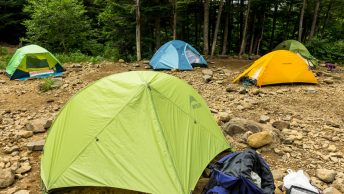
Wild camping isn’t permitted in national parks or on private land, and is generally discouraged throughout Japan. Most of the Kiso Valley falls under one or other of these categories. That said, plans don’t always go as designed. On my own walk, I’d hoped to stay at the refuge hut near Torii Pass; however, when I got there, it was locked, and the only realistic option left was to pitch right beside it. That was my fault, and I should have checked beforehand. That’s a contingency, not a recommendation.
Many official campsites are limited and seasonal. Most close over winter (typically opening mid-to-late April and closing late October or November), and several are major detours off the trail itself, sometimes requiring a bus, taxi, or a long uphill walk to reach. None of them are directly on the walking route, at least along the 100-kilometre section of the Kiso Valley between Nakatsugawa Station and Hideshio Station covered in the guidebook.
Fees can be surprisingly high for what you get. Most of these facilities are built for car campers with full kit, not minimalist through-hikers. Don’t expect ¥2,000-a-night standard mountain hut campsite pricing; several of the options below charge nearly what you might spend at a budget night in a minshuku and even more if you need to rent a tent.
There’s no continuous camping option across all five days. Some stretches, particularly the final leg into Shiojiri and Hideshio, have no campsites at all. If you want to camp the whole way, you’ll need to mix in a minshuku night or two or take a taxi to a site that’s off-route.
With that out of the way, here’s what’s actually available, day by day.
Day 1 Area: Nakatsugawa to Tsumago
Nagiso Sanroku Araragi Camping Village (南木曽山麓キャンプ場)
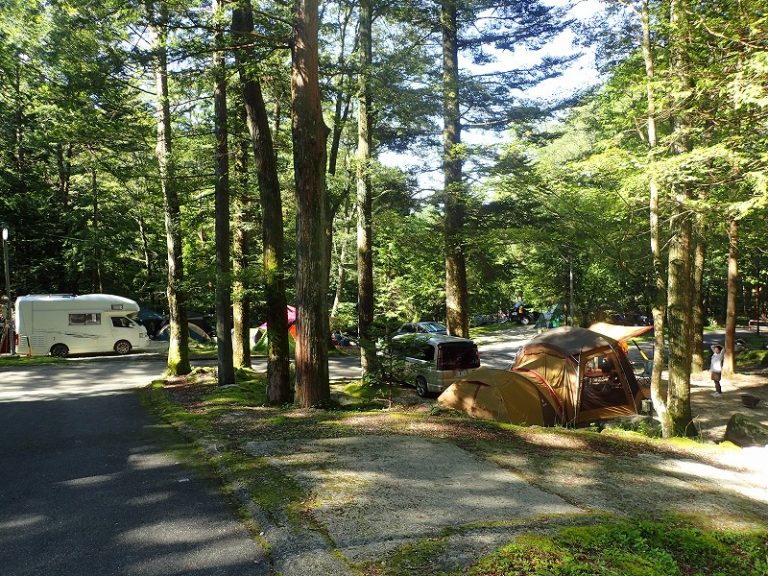
Nagiso Sanroku Araragi Camping Village. Image: kiso-nagano.
Nagiso Sanroku Araragi Camping Village is the most realistic camping option for the end of Day 1. It sits in forest east of Tsumago at 800–900 metres elevation, offering sheltered tent sites, cabins, and bungalows, with tent rental available if you haven’t carried your own.
Access: About 20 minutes by bus from Nagiso Station to the Ogoshi bus stop, then a further uphill walk.
Open: Early April to late November.
Price: From ¥4,500.
ties Camp Ground Nagiso
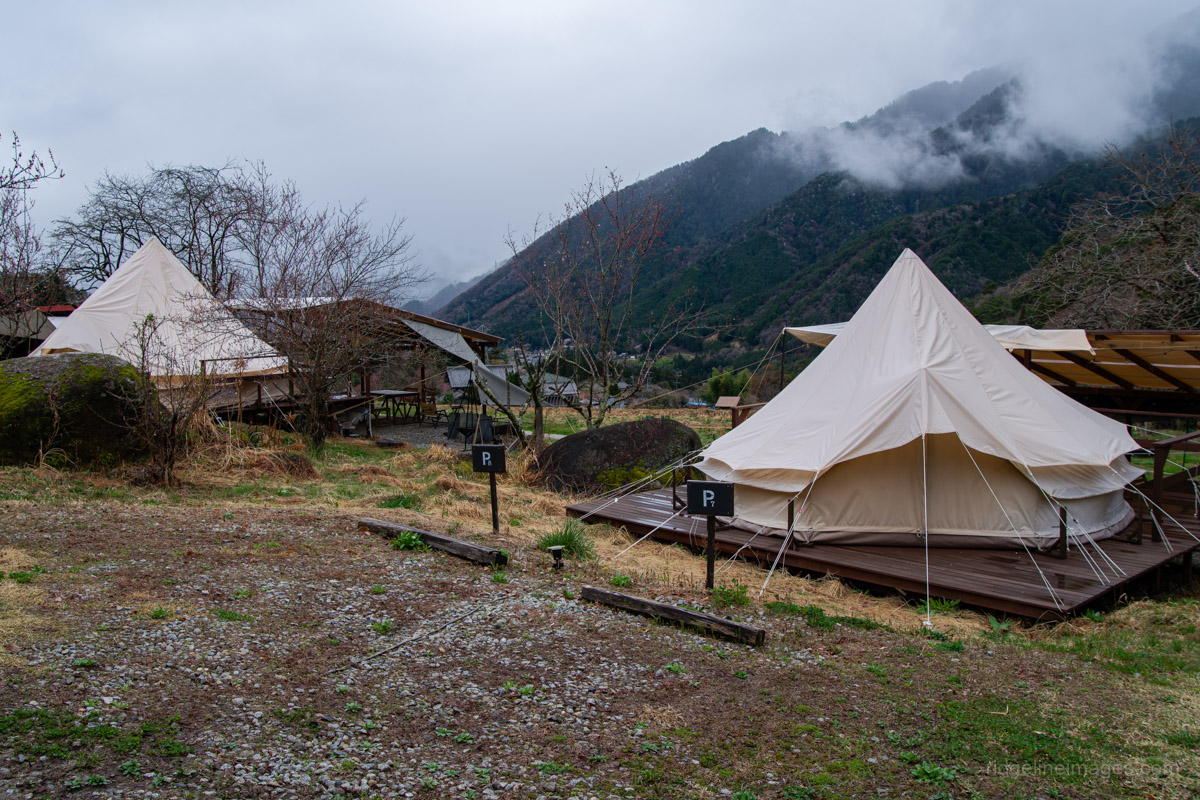
ties Camp Ground Nagiso.
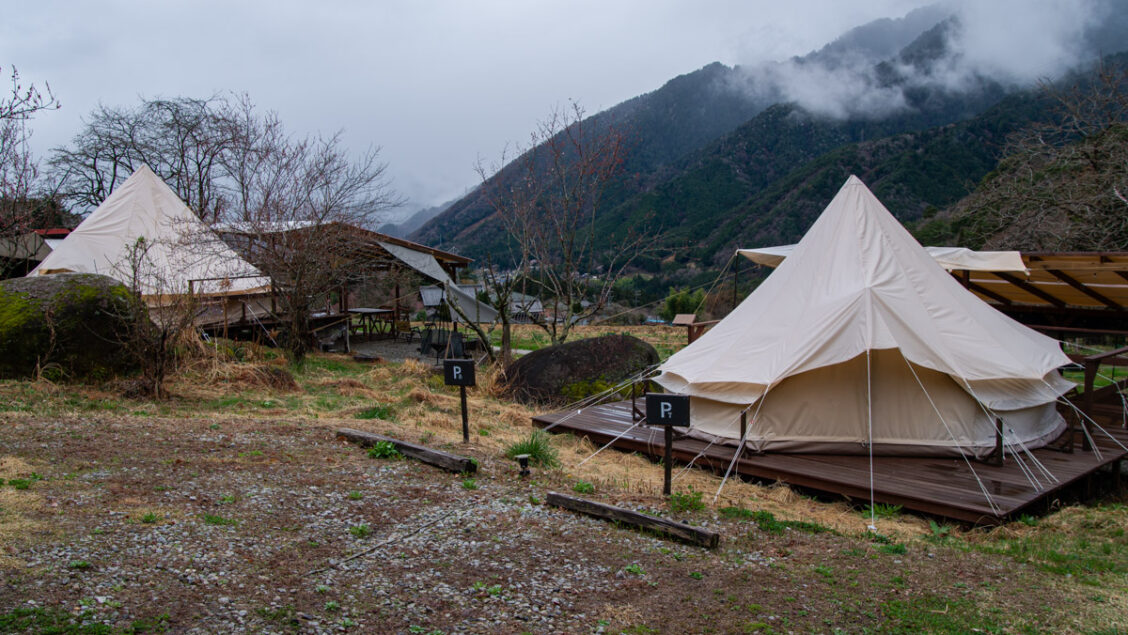
A different proposition altogether, ties Camp Ground Nagiso is a recently opened, stylish glamping site built around a beautifully restored 150-year-old kominka farmhouse, within walking distance of Nagiso Station itself. Showers, a communal kitchen, and genuinely comfortable modern facilities.
This is firmly at the premium end (more glamping than camping in the traditional sense), but if you want one indulgent night on the trail with a tent-shaped roof over your head, it’s a memorable option, and its in-town location makes it far more convenient than some of the other forest sites listed here.
Access: Walking distance from Nagiso Station.
Open: Year-round. Book well in advance.
Price: From approximately ¥40,000 per night for two people.
Day 2 Area: Tsumago to Nojiri
Nozokido Forest Park Camping Ground (のぞきど森林公園キャンプ場)
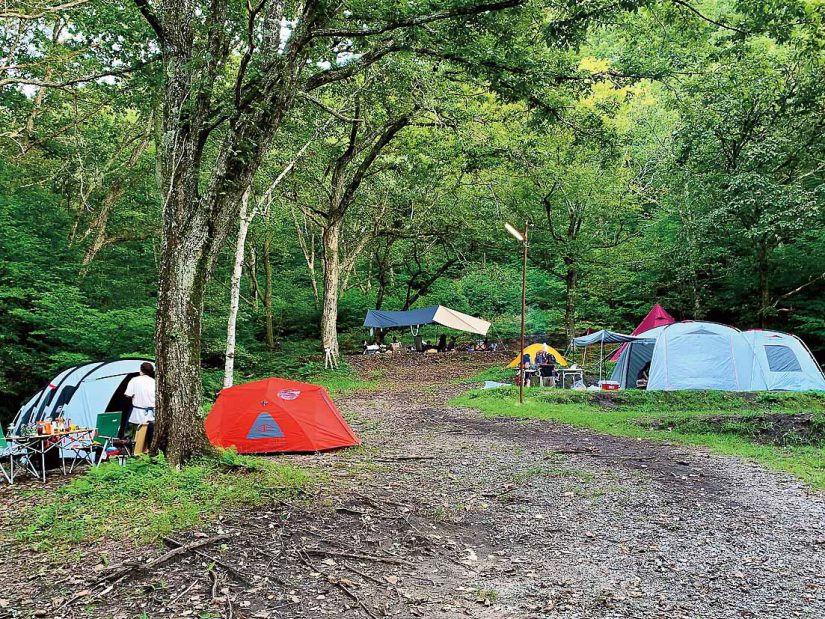
Nozokido Forest Park Camping Ground. Image: web-komachi.
Nozokido Forest Park Camping Ground is a beautiful, well-maintained campground on a plateau at 1,000 metres, 1.5 km off the Yogawa-michi as it heads into Nojiri-juku.
Open: Mid-April to mid-November.
Price: From ¥3,500.
Kisofureai-no-sato Camping Ground (木曽ふれあいの郷キャンプ場)
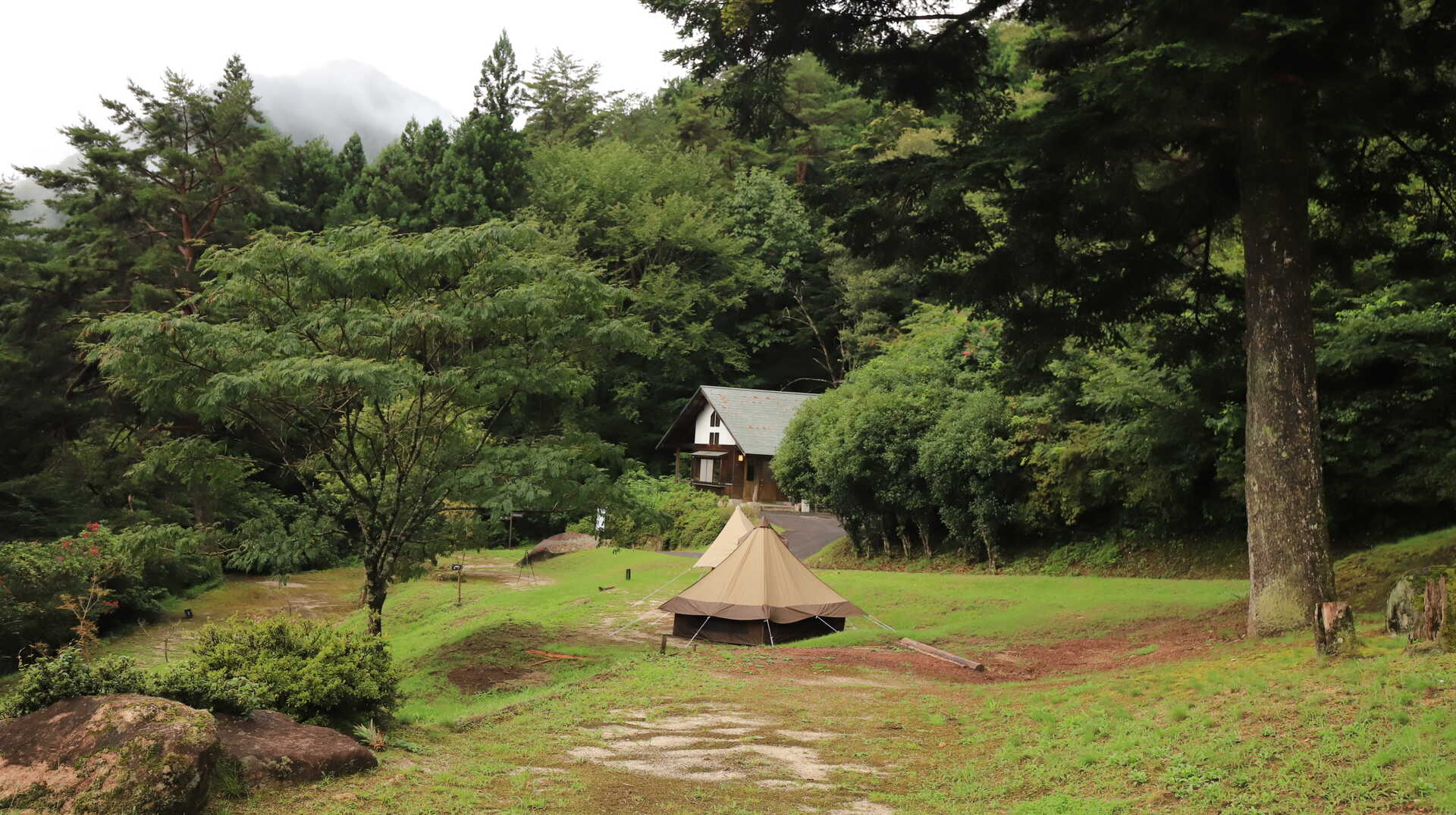
Kisofureai-no-sato Camping Ground. Image: nap-camp.
Kisofureai-no-sato Camping Ground is a scenic riverside site next to the Atera-sō Forest Spa, a 30-minute walk from Nojiri Station. The Atera Valley here is known for its striking turquoise water and a dramatic gorge, and staying here gets you free use of the spa’s bath – a small luxury after a day on the trail.
Access: 30-minute walk from Nojiri Station.
Open: Mid-April to early November.
Price: From ¥3,300.
Day 3 Area: Nojiri to Kiso-Fukushima
Camping Field Kiso Kodo (キャンピングフィールド木曽古道)
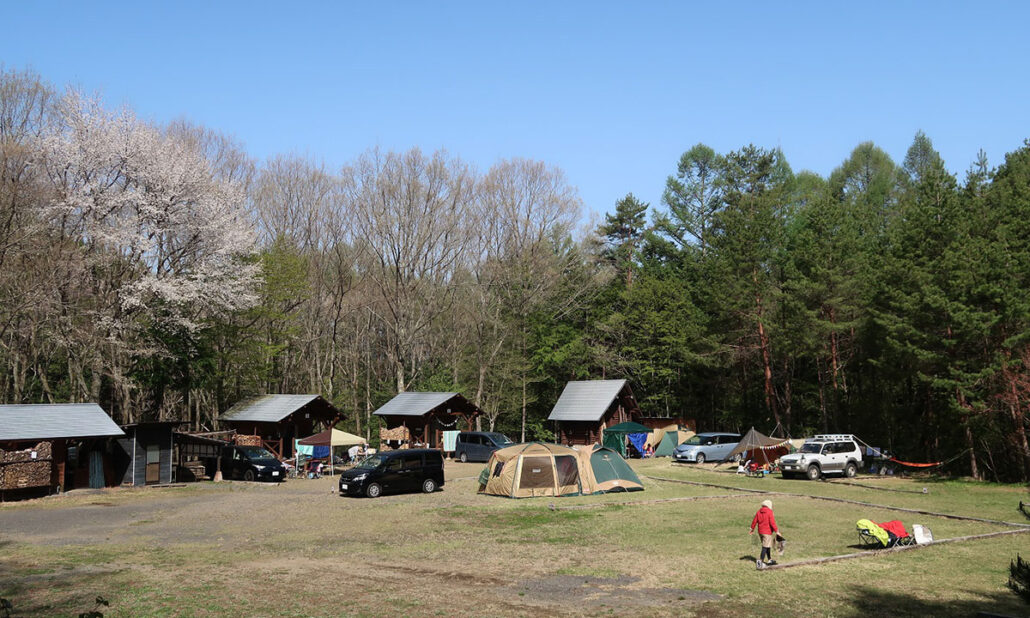
Camping Field Kiso Kodo. Image: kisokodo.
Camping Field Kiso Kodo is a well-equipped site near Kiso-Fukushima at 1,030 metres, with tent sites and bungalows, BBQ facilities and, unexpectedly, a Finnish sauna.
Access: Around 10 minutes by taxi, or roughly an hour’s walk (mostly uphill) from Kiso-Fukushima Station.
Open: Late April to end of October.
Price: From ¥4,000.
This is the last formal, well-equipped campsite you’ll encounter heading north. From here to the end of the route, options thin out considerably.
Day 4 Area: Kiso-Fukushima to Narai
Torii Pass refuge hut (kyukeisho, 休憩所)
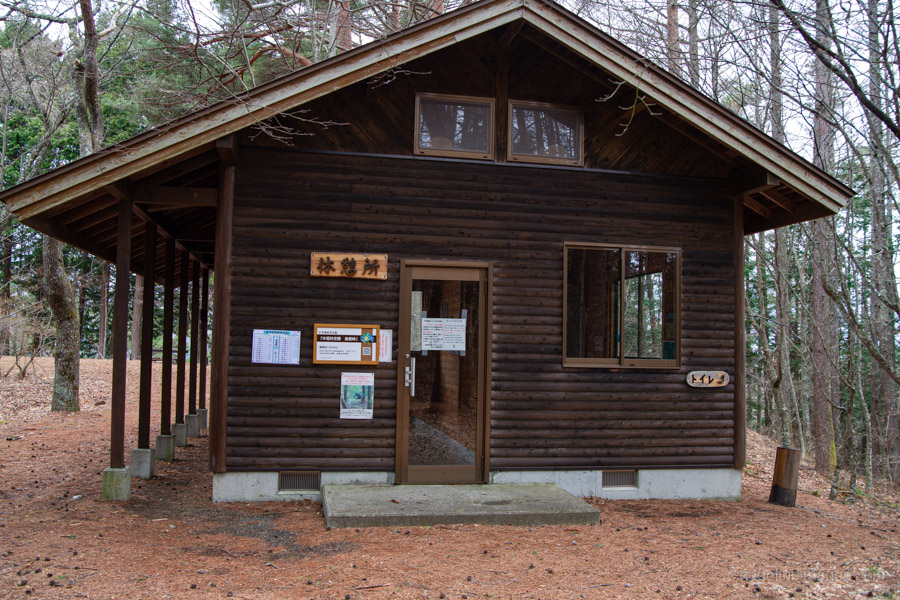
Torii Pass refuge hut (kyukeisho).
Between Yabuhara and Narai, on the Day 4 stretch over Torii Pass, there’s the Torii Pass Refuge Hut, an unmanned hut at the site of a former weather station, referred to locally as a rest house. It’s free to use, offers basic shelter and a toilet only, and is seasonal.
I want to be straightforward about this one: it’s best treated as an emergency option or for the genuinely adventurous rather than a planned first choice for a night’s camp. There’s no bedding, no facilities beyond a roof and a toilet, and conditions on the pass can turn quickly. Full route details are in the Day 4 section of the main guide.
Putting Together a Camping Itinerary
If you wanted to camp as much of this route as possible, here’s roughly how the nights would fall:
Night 1 (Nakatsugawa to Tsumago): Nagiso Sanroku Araragi Camping Village is the straightforward choice – accessible by bus from Nagiso Station and the most hiker-friendly option on the route. ties Camp Ground Nagiso is the alternative if you’d rather one comfortable, well-located night close to town.
Night 2 (Tsumago to Nojiri): Kisofureai-no-sato is the pick here – riverside setting, free onsen, and a reasonable price. Nozokido is the more secluded option if you’d rather be higher up in the forest.
Night 3 (Nojiri to Kiso-Fukushima): Camping Field Kiso Kodō, the last well-equipped campsite heading north. Budget for the taxi unless you’re happy with an hour’s uphill walk after a full day on the trail.
Night 4 (Torii Pass area): This is where the options run thin. The refuge hut near Torii Pass is free but unreliable – I found it locked and ended up pitching beside it. Realistically, most walkers will overnight in Narai at a minshuku and move on the next morning.
Night 5 (Narai to Hideshio): No camping options on this final stretch. A minshuku or guesthouse in or around Shiojiri is the only realistic choice.
In short: the first three nights line up well for a tent-based approach, and with a little planning, it’s a rewarding way to walk the Kiso Valley. Just don’t count on camping all four nights – the route doesn’t quite allow for it.