
Lessons Learned after Stumbling into Mountain Guiding
Around this time last year, roughly ten days before I was due to fly home for Christmas, an unexpected email landed in my inbox. Someone wanted to join me on a hike. Anyone who has followed this blog for any length of time has probably noticed that I seldom hike with others. It’s not because I’m antisocial or dislike company; far from it. I simply find that escaping into the mountains alone is the best way to reset my mind. There are other reasons too, which I’ve written about before, but being on my own has always been a natural part of my time outdoors.
Still, this inquiry caught my attention. I explained truthfully that I didn’t have any hikes planned because I was about to head overseas. But if they were keen, I said I’d be willing to organise a guided day hike before I left. And that, as they say, was the beginning of everything.
Over the years running this blog, I’ve occasionally received messages from readers asking whether I offer private hiking tours. Usually, I politely declined. Between my regular teaching job, keeping up with the blog, and everything else life throws our way, I already felt busy enough. More honestly, though, doubts tended to creep in. Was I experienced enough? Was I qualified? Would I be found out as someone pretending to be a guide rather than actually being one? The infamous imposter syndrome.
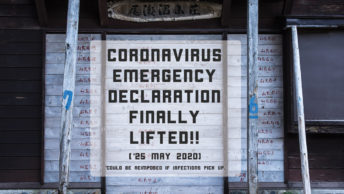
As a brief detour, if you ever find yourself spiralling into that same self-doubt, just remember Yoshitaka Sakurada, the man appointed to head Japan’s cybersecurity strategy office who publicly admitted he had never used a computer. If he thought he could fake it till he made it, then surely there’s hope for the rest of us. Compared to that, offering to take a couple of people up a mountain seems like a fairly safe bet.
It was a genuine relief when that first guided hike went off without a hitch. I quickly realised that, while I still had plenty to learn, guiding was something well within my skill set. Most of my initial self-doubt evaporated somewhere along the trail that day. The main thing I learned early on was that guiding isn’t about being the boldest or the fastest or even the most knowledgeable person on the mountain; it’s about creating a safe, comfortable experience and planning for the unexpected, because the unexpected will always show up in one form or another.
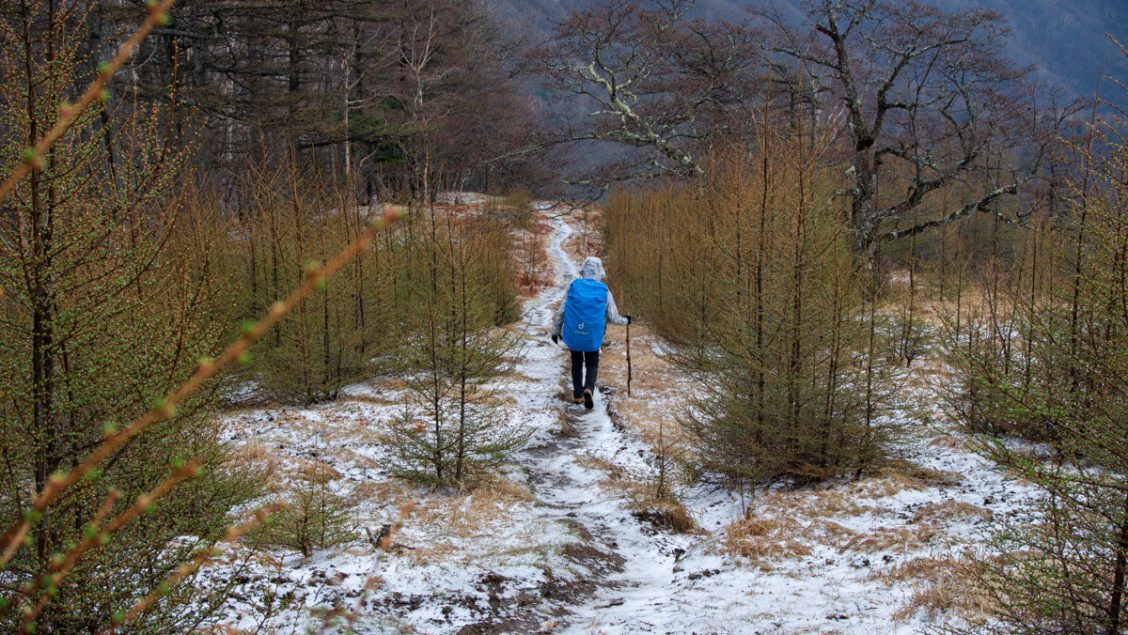
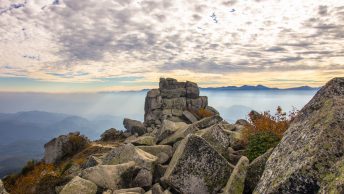
After a couple of day hikes under my belt, and as Golden Week approached, I led my first overnight trip: a two-day hike to Mt. Takanosu, staying at its namesake refuge hut tucked below the summit. It felt like a milestone – my first real venture into something longer, more logistically involved, and more physically demanding for guests. On the first day, we were suddenly pelted with graupel – arare in Japanese – small, soft snow pellets that bounce off your jacket like miniature hailstones. I had never experienced it before. It wasn’t dangerous, just surprising. The second morning, we fared much better. The clouds opened just long enough to offer spectacular summit views, the kind that make you stop mid-stride and simply take it all in.
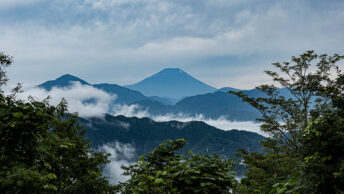
Over the rest of the year, I guided hikes from as close to home as Mt. Takao to as far afield as Yatsugatake, and I enjoyed them very much – hopefully as much as my clients did. A handful of lessons emerged along the way. For overnight trips, negotiating departure times has become an art form: I typically suggest a “late” 5:00 am, clients often counter with an “early” 7:00 am, and we eventually settle somewhere in the middle. For all hikes, checking a person’s recent hiking experience and fitness has become essential, as people tend to reel off mountains they climbed in their younger days, which can make it hard to accurately gauge their current level. Trails even close to Tokyo can be surprisingly tough for the uninitiated, and before committing to a route with over 1,000 metres of elevation gain, I need to be confident it’s within someone’s capabilities. I’m still getting used to this one, but finding the right pacing (neither too exhausting nor too leisurely) and planning routes that allow for flexible adjustments on the fly has proved invaluable. I’ve also learned to carry supplies I don’t often need myself, such as knee tape, extra food, and an emergency blanket.
One common question I get is how I find clients and whether I pay for advertising. The short answer is no, I don’t use Google Ads or anything similar. Guided hikes are a very niche corner of the tourism world, and thanks to the blog, my Guided Hiking Tours page already ranks in the right places. A few clients have even told me they discovered my tours through ChatGPT.
Another question I’m often asked is how I build trust, given that I appear to be just some random person on the internet. The honest answer is that it mostly comes down to the reputation I’ve (hopefully) built through the blog over the years.
So after a year of guiding, do I still feel like an imposter? Occasionally. But much less than before. It turns out that helping people enjoy the mountains is mostly about preparation, communication, and simply caring that they have a good day, not about being some mountain sage who’s memorised every contour line. Most of the real work happens long before we reach the trailhead: checking conditions, adjusting plans, watching how people are coping, and making a dozen tiny decisions that keep the day running smoothly. And with that, I’m looking forward to whatever adventures or accidental opportunities the next year has in store.
Many thanks for this most profound and enjoyable thought-piece. I chuckled at the Sakurada anecdote (hadn’t heard it before) and will commit to memory one of your observations: “guiding isn’t about being the boldest or the fastest or even the most knowledgeable person on the mountain; it’s about creating a safe, comfortable experience and planning for the unexpected, because the unexpected will always show up in one form or another.” Has to be right – the really great alpine guides seem to create a reality distortion field around themselves, so that, to their clients, even the most exposed ridges or faces seem to be no more demanding than a stroll along the local Ginza or Bahnhofstrasse….
Thanks for the kind words, PH. Pleased the Sakurada bit raised a smile! And yes, the best alpine guides really do have a knack for making difficult terrain feel almost leisurely. Definitely something to aspire to.
Hello David. Love this musing and have trusted your trails for years with a wonderful group of friends, who I have hiked with every Tuesday for the past five years. I’ve just moved to Singapore now and sadly finishing up a few subscriptions. Can you please cancel my subscription? If I come to live in Japan again I’ll be sure to re-subscribe.
Take care and all the best for your adventures,
Hayley
Ps: sorry I could not find another way to reach you so hope this does!
Hi Hayley, thank you for the kind words.
I think you might be referring to my Patreon. If so, the subscription needs to be cancelled from your end, but it’s very straightforward: you can simply change your membership to a free tier or cancel it directly through your Patreon account settings.
Thanks again for your support over the years.
Wishing you all the very best with the move to Singapore. David.